

Property disputes can be a source of significant stress and confusion, whether they involve boundaries, easements, or co-ownership issues. Understanding your legal rights and the various avenues for resolution is crucial to protecting your interests. At Weaver, Bennet & Bland, P. A., our experienced team is dedicated to guiding individuals through these complex legal landscapes, ensuring clarity and advocating effectively on their behalf.

Common Types of Property Disputes
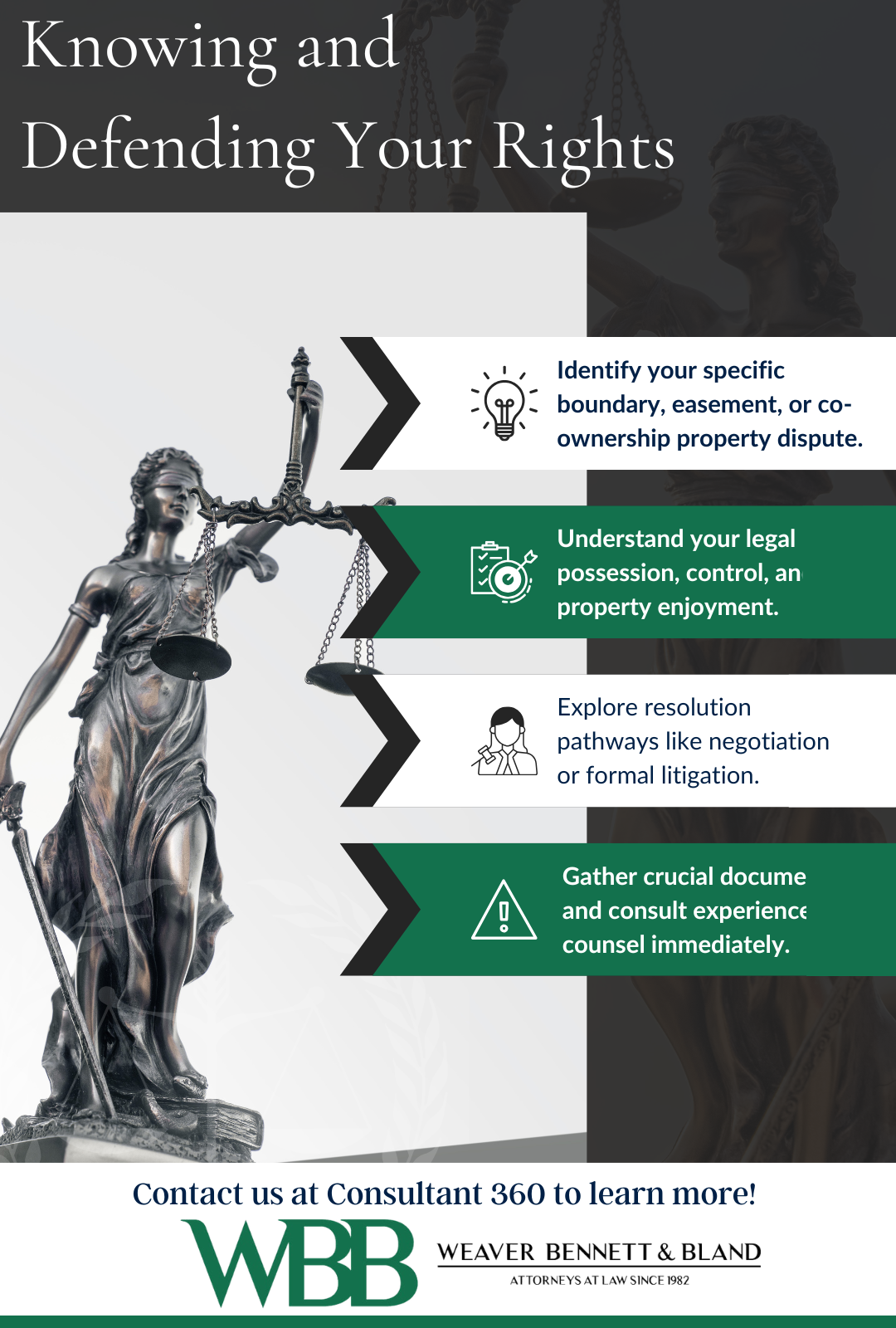
Property disputes manifest in many forms, often arising from unclear agreements, historical boundaries, or changes in property use. Boundary disputes are among the most frequent, occurring when property lines are uncertain or contested, potentially impacting land use or development. Easement disputes involve disagreements over the right to use another's land for a specific purpose, such as a driveway or utility access. Furthermore, co-ownership disputes can emerge when multiple parties own a property together, leading to disagreements over management, sale, or profit distribution. Understanding the nature of your specific dispute is the first step toward finding an effective resolution.

Your Fundamental Property Rights
Every property owner possesses a bundle of rights that are protected by law, and understanding these is paramount in any dispute. These rights typically include the right to possession, the right to control the property within legal limits, the right to enjoyment without interference, and the right to dispose of the property. Key documents such as deeds, surveys, and title insurance policies are fundamental in defining these rights and proving ownership boundaries. Specific legal principles, like adverse possession, though rare, can also impact property rights over time if certain strict conditions are met. Being informed about these foundational legal concepts empowers you to assert your position confidently.

Pathways to Dispute Resolution
When a property dispute arises, several pathways are available for resolution, ranging from informal discussions to formal legal proceedings. Often, negotiation between parties can lead to an amicable settlement without further intervention. If direct negotiation proves difficult, mediation, involving a neutral third party, can facilitate communication and help parties reach a mutually agreeable solution. Arbitration offers a more formal process where an arbitrator hears evidence and makes a binding decision. In cases where these methods are unsuccessful, litigation in court becomes necessary to resolve the dispute, with a judge or jury making the final determination based on legal arguments and presented evidence. Each option carries distinct advantages and disadvantages, making informed decision-making essential.

The Critical Role of Documentation and Professional Counsel
Regardless of the nature of your property dispute, thorough documentation and professional legal advice are indispensable. Maintaining accurate records, including deeds, surveys, written agreements, and any correspondence related to the property, provides concrete evidence to support your claims. Moreover, consulting with an attorney early in the process can significantly influence the outcome. Legal professionals can interpret complex property laws, assess the strength of your case, and advise on the most strategic approach to protect your interests, whether through negotiation or formal legal action. Their expertise ensures that all legal nuances are considered and that your rights are vigorously defended.
Navigating the complexities of property disputes requires a clear understanding of your rights and the various resolution avenues available. From boundary disagreements to co-ownership challenges, each situation demands a thoughtful and informed approach to protect your valuable assets. To gain a deeper insight into your specific situation and explore the best path forward, we encourage you to connect with the knowledgeable legal team at Weaver, Bennet & Bland, P. A.