

Starting a small business is an exciting journey filled with potential, but it also comes with a critical need for establishing a robust legal framework. Laying a strong legal foundation from the outset is not merely a formality; it is essential for protecting your assets, ensuring compliance, and fostering long-term stability and growth. This process involves understanding various regulations, choosing the appropriate business structure, and safeguarding your enterprise against potential legal challenges. At Weaver, Bennet & Bland, P. A., we recognize the fundamental importance of sound legal guidance in navigating these initial complexities, helping entrepreneurs build their ventures on solid ground. This article will explore key legal foundations every small business owner should consider.
Choosing the Right Business Structure
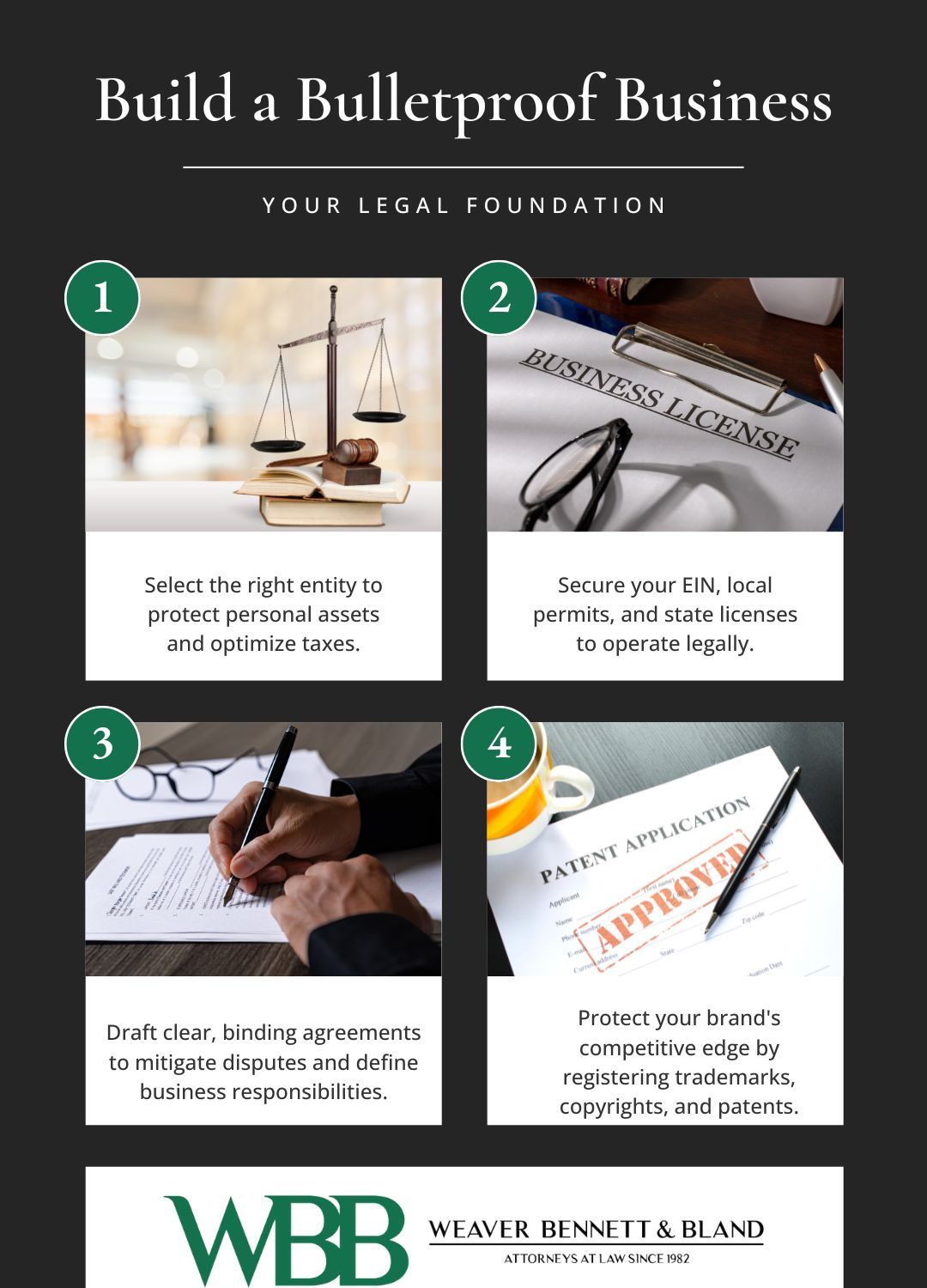
One of the first and most critical legal decisions for any new business is selecting its organizational structure. Options typically include a sole proprietorship, partnership, limited liability company (LLC), or corporation. Each structure carries distinct implications for personal liability, taxation, administrative burden, and fundraising potential. For example, a sole proprietorship is simple to establish but offers no personal liability protection, meaning your personal assets could be at risk. Conversely, an LLC provides personal liability protection, separating business and personal assets, and offers flexible tax treatment. Thoroughly understanding these differences and their long-term impact on your business and personal finances is paramount.

Essential Registrations and Licenses
Once a business structure is chosen, the next step involves securing the necessary registrations and licenses to operate legally. This often begins with obtaining an Employer Identification Number (EIN) from the IRS, which is essential for tax purposes, hiring employees, and opening business bank accounts. Beyond federal requirements, businesses must register with state authorities, typically the Secretary of State's office, and comply with local zoning laws and obtain any required municipal permits or licenses. Depending on your industry, specific professional or trade licenses may also be mandated. Operating without the correct permits and licenses can lead to significant fines, legal complications, and even forced closure.

Crafting Sound Contracts and Protecting Intellectual Property
The backbone of any successful business relies heavily on clear, legally binding agreements and the protection of its unique assets. Well-drafted contracts with vendors, clients, employees, and partners establish expectations, define responsibilities, and mitigate disputes. These documents should clearly outline terms of service, payment schedules, confidentiality clauses, and dispute resolution mechanisms. Equally important is safeguarding your intellectual property (IP), which can include your business name, logo, products, and services. Registering trademarks for your brand identity and copyrights for creative works, or patents for inventions, provides legal ownership and prevents others from unauthorized use, thereby preserving your competitive edge and financial investment.

Laying the Groundwork for Future Success
Establishing a small business requires careful attention to its legal foundations to ensure its longevity and protect your investment. From selecting the appropriate business structure and securing necessary registrations to drafting robust contracts and safeguarding intellectual property, each step contributes to a secure and compliant operation. With over forty years of experience deeply rooted in the Matthews community, Weaver, Bennet & Bland, P. A. understands the diverse legal needs of growing businesses. To gain a clearer understanding of how these foundational legal principles apply to your unique entrepreneurial endeavors, we invite you to explore resources and consult with a qualified legal professional.